
Torch-on membrane — sometimes called torch-applied bituminous membrane or SBS modified bitumen — has been the standard flat roof waterproofing system in New Zealand for decades. If you've had any roofing or waterproofing work done on a residential or commercial property, there's a good chance torch-on was involved. Here's how it works and what separates a quality installation from a poor one.
What is torch-on membrane?
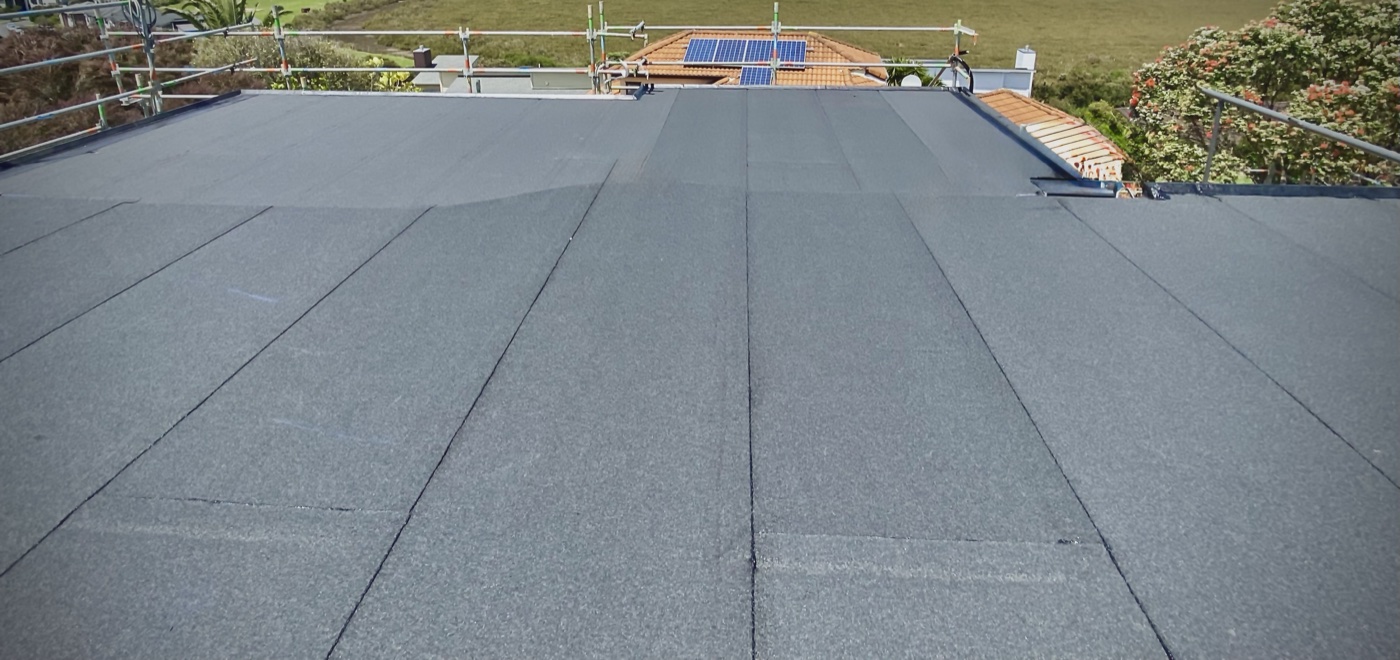
Torch-on is a bituminous membrane reinforced with a polyester or fibreglass carrier. The underside is coated with a layer of bitumen that melts when heat is applied — the membrane is literally torched onto the substrate or the previous layer, creating a continuous, seamless waterproof barrier.
Modern torch-on membranes are modified with SBS (styrene-butadiene-styrene) rubber, which significantly improves flexibility, elasticity and low-temperature performance compared to the older plain bitumen systems. The top surface is typically finished with mineral granules or a smooth foil for UV protection.
How the application works
A standard torch-on installation involves two or more layers: a base sheet and a cap sheet. The process:
- Substrate preparation — the deck must be clean, dry and primed. Any movement or deflection in the substrate should be addressed before membraning starts.
- Base sheet application — the first membrane layer is torched down, providing a stable base and additional waterproofing redundancy.
- Cap sheet application — the finished layer is torched over the base, with all laps and details fully bonded.
- Detail work — penetrations, upstands, drains and edges are all flashed individually. This is where most failures originate if not done correctly.
The detail work — penetrations, upstands, and edges — takes as long as the field membrane. A good installer spends as much time on the 10% of complex areas as the 90% of open deck.
Residential applications
Torch-on is widely used on Auckland residential properties for:
- Flat and low-slope roofs on single and multi-level homes
- Deck and balcony waterproofing (under pavers or exposed with mineral finish)
- Garage roofs and carport decks
- Re-roofing of existing failed membranes
On residential jobs, torch-on's ability to adapt to complex geometries — multiple penetrations, internal corners, unusual shapes — makes it well suited to the variety of Auckland's housing stock.
Commercial and new build applications
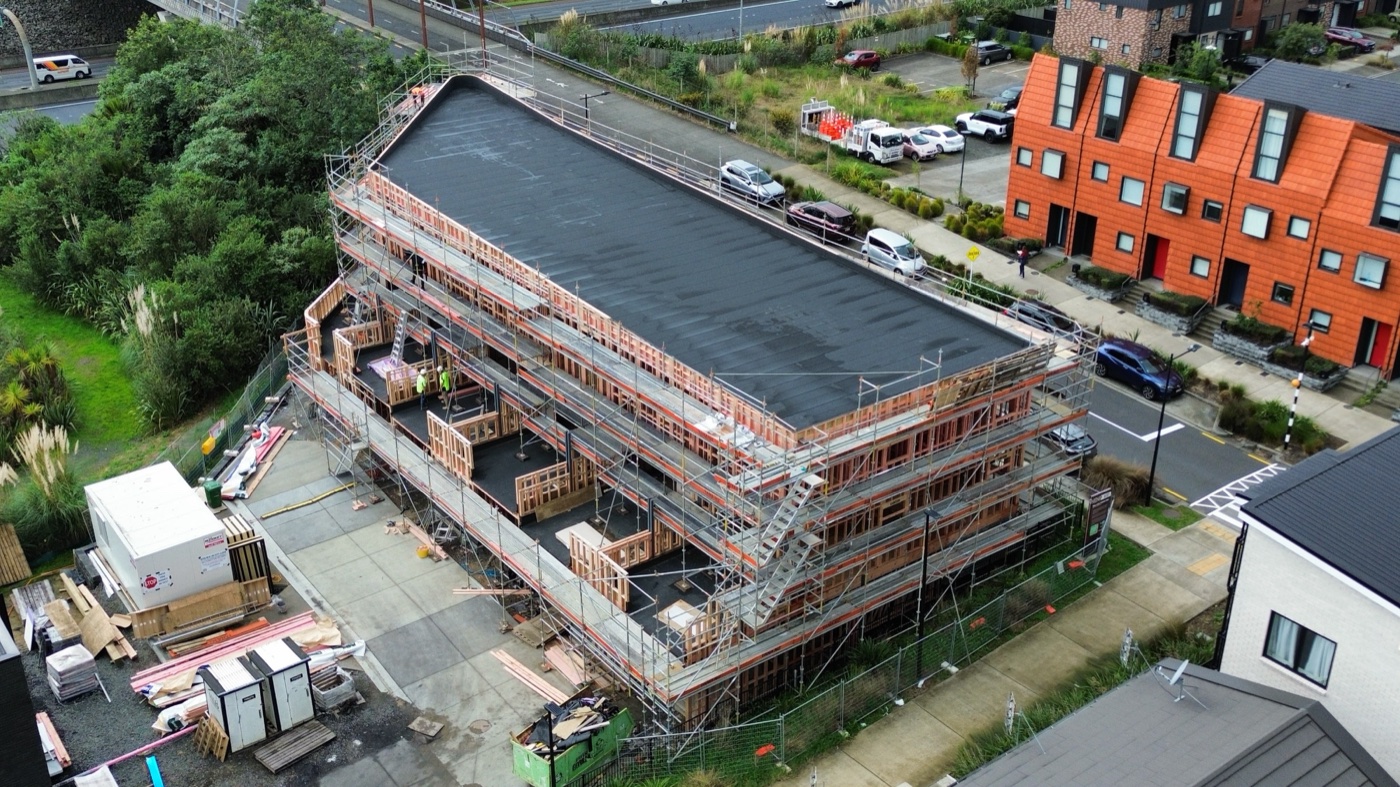
On the commercial side, torch-on handles large-scale flat roof areas well. It's commonly specified on:
- Commercial and industrial buildings with large flat roof areas
- Multi-unit residential new builds
- Podium decks and car park roofs
- Re-roofing projects where the existing substrate is suitable
For very large, open commercial roofs, TPO or Fibertite single-ply systems may be more efficient. But for projects with complex details and varied geometries, torch-on remains the practical choice.
How long does it last?
A well-installed two-layer SBS torch-on system will typically last 15–25 years in Auckland's climate. Longevity depends on three things: quality of the membrane product, quality of installation, and condition of the substrate underneath.
The most common reasons for early failure:
- Inadequate substrate preparation — membraning over a soft or damp deck
- Insufficient lap bonding, particularly at seams on slopes
- Poor upstand detailing — water entry behind the membrane at walls
- Blocked or incorrectly positioned drains
Most torch-on failures we're called to repair aren't membrane failures — they're installation failures. The material is sound; the application wasn't done properly the first time.
When torch-on is the right choice
Torch-on is the right specification when:
- The roof has complex geometry with many penetrations, internal corners, or varying levels
- You need proven, well-understood technology across the build team
- Staged installation is required — torch-on can be applied in sections without compromising performance
- Budget is a consideration — torch-on is generally well-priced relative to its performance
Torch-on for your project?
We install torch-on systems across Auckland — residential and commercial. Free site visit and clear quote.
Get a Free Quote