
Tanking is the term used for waterproofing systems applied to below-ground structures — foundations, retaining walls, basement slabs, and any concrete element that will be in contact with the ground or subject to hydrostatic pressure. It's a completely different discipline from roof or deck waterproofing, and the stakes are higher: once a structure is backfilled, fixing a failed tanking system means excavation.
What is tanking, exactly?
The name comes from the concept of making a structure watertight like a tank — preventing water from entering from any direction. Where a roof membrane deals with water running over it, a tanking system must resist water pushing against it from the outside under hydrostatic pressure.
This distinction matters because it affects both material selection and installation technique. A membrane that performs well on a flat roof may be completely unsuitable for a below-ground application where it needs to resist ground water pressure without delaminating from the substrate.
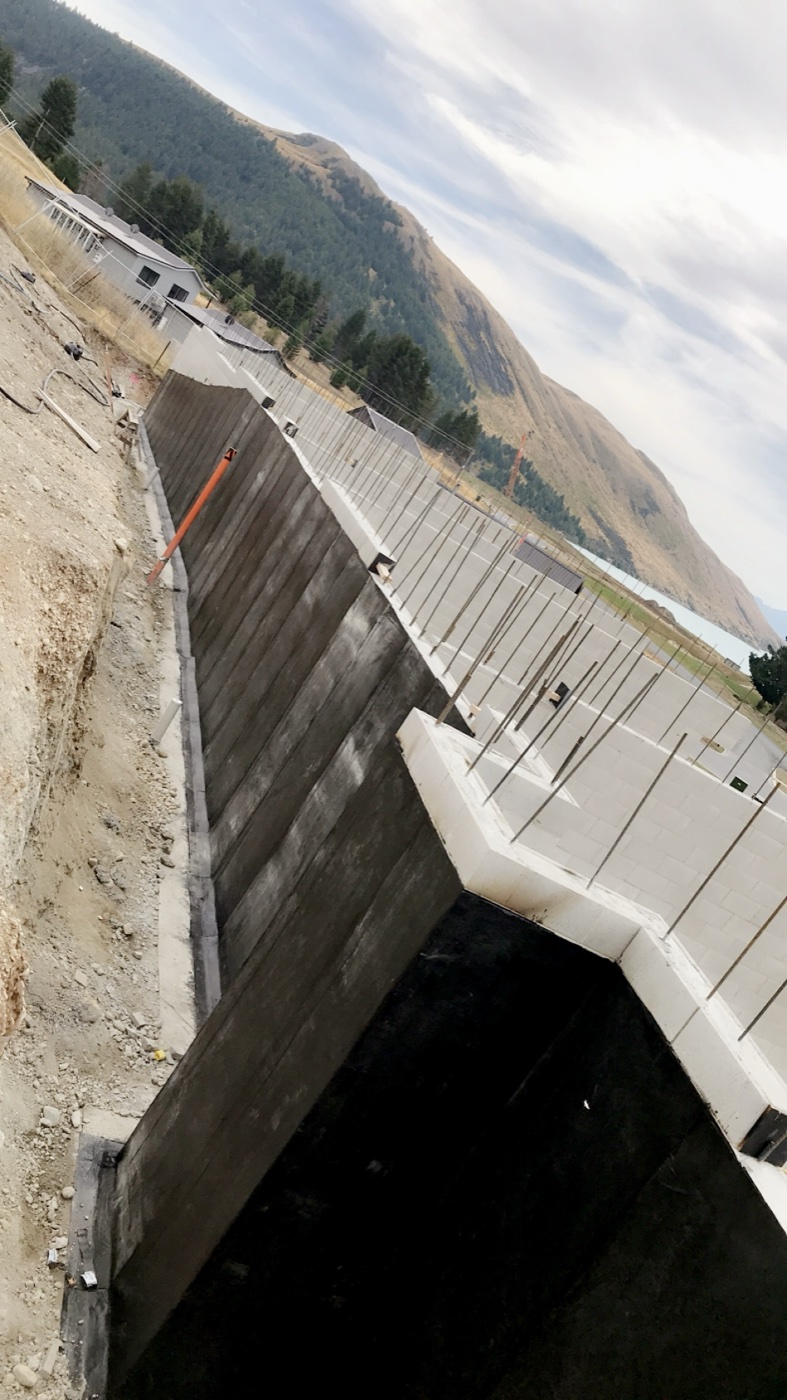
Where tanking is used in Auckland
Tanking is required wherever a structure is in contact with ground moisture or where water ingress would cause damage or structural problems:
- Foundation walls — residential and commercial, particularly on sloped sites or where groundwater is present
- Retaining walls — concrete retaining structures that will be backfilled with soil
- Basement slabs and walls — both new builds and remediation of existing leaking basements
- Tilt-slab construction — the base of tilt-slab panels and the footing connection
- Subterranean car parks and service areas
- Planter boxes and podium decks — any structure where soil is placed over a concrete element
On sloped Auckland sites, foundation tanking is often non-negotiable. The combination of clay soils, high rainfall, and cut-and-fill construction creates ground water pressure against foundations that only correct tanking handles properly.
Materials used for tanking
Several material types are used for tanking applications, each with appropriate uses:
Sheet-applied membranes (Bituthene, Grace Ice & Water Shield)
Self-adhesive or torch-applied bituminous sheet membranes are commonly used on foundation walls. They're applied to the primed concrete surface and provide a continuous, high-performance waterproof layer. Bituthene (manufactured by GCP Applied Technologies) is one of the most widely specified products in New Zealand for this application.
Liquid-applied membranes
Polyurethane or bituminous liquid membranes applied by roller or spray. Better for complex geometry, penetrations, and areas where a sheet membrane can't be easily applied. Can be used alone or as a detail coat under a sheet system.
Cementitious waterproofing
Rigid or semi-flexible crystalline systems applied to the concrete surface. Used where access for membrane application is limited, or as a secondary system behind a sheet membrane.
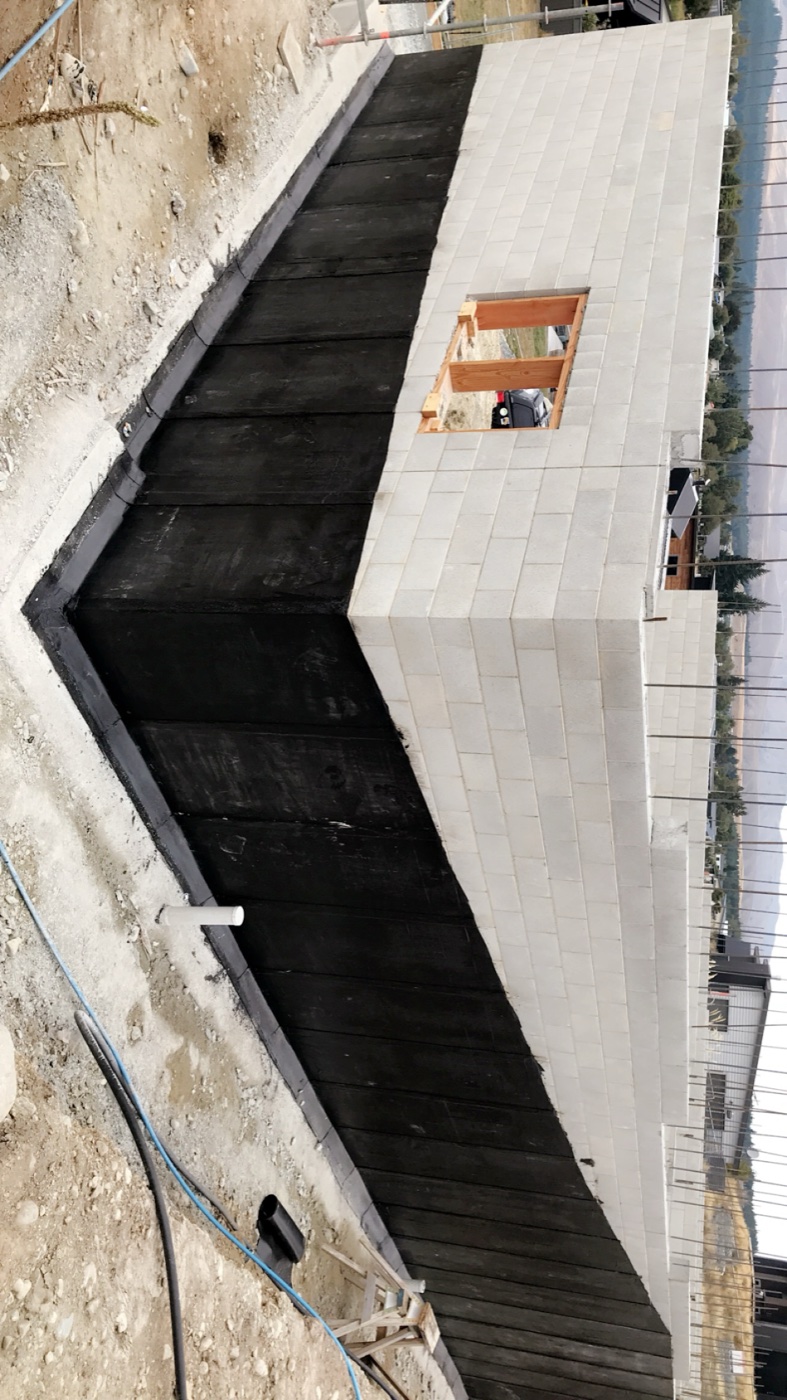
The tanking process: timing is everything
The most critical aspect of tanking is timing. The membrane must be applied at the right point in the construction sequence — after the concrete has cured sufficiently and been prepared, but before any subsequent construction activities that could damage the membrane or before backfilling occurs.
On a typical foundation tanking project:
- Concrete cure and preparation — surfaces are assessed for honeycombing, form tie holes, and cracks. These are repaired and ground smooth before any membrane is applied.
- Priming — concrete surfaces are primed to ensure membrane adhesion. Moisture content is checked — applying a membrane to green or damp concrete is one of the most common causes of delamination.
- Membrane application — sheet or liquid membrane is applied continuously across all surfaces, including the transition from slab to wall.
- Detail work — all penetrations (pipes, tie holes, construction joints) are independently detailed before the field membrane.
- Protection board — a drainage cell or protection board is placed over the membrane before backfilling to protect it from damage.
The slab-to-wall transition is the most critical detail in tanking. Water will find any discontinuity in the membrane at this junction. It needs to be lapped and sealed correctly — not just overlapped.
When tanking has failed
Signs of failed or inadequate tanking in an existing structure include:
- Efflorescence (white salt deposits) on internal concrete or blockwork walls
- Visible water ingress after rain or in winter months
- Damp patches on internal wall linings or floor coverings
- Rust staining from corroding reinforcement
- Mould growth on internal surfaces
Remediation of failed tanking on an existing structure is significantly more complex and expensive than a new installation — sometimes requiring excavation to access and re-apply the external membrane, or the use of internal remedial systems where external access isn't possible.
Getting it right before backfill is always the better option.
Foundation or below-ground waterproofing?
We'll assess the structure and specify the right tanking system for your site conditions. Free site visit for Auckland projects.
Get a Free Quote