
Fibertite is a high-performance single-ply roofing membrane manufactured by Seaman Corporation in the United States. It's been in continuous production since 1979 and carries a track record across some of the most demanding industrial and commercial applications in the world. In New Zealand, it's specified when standard TPO or torch-on systems aren't enough for the project's requirements.
What makes Fibertite different from standard TPO?
The core difference is reinforcement. Standard TPO membranes use a polyester scrim embedded in the membrane body for dimensional stability. Fibertite uses a woven polyester base reinforcement combined with a proprietary KEE (ketone ethylene ester) polymer formulation — significantly more resistant to puncture, chemical attack and dimensional movement than standard polypropylene-based TPO.
Key performance differences:
- Higher tear and puncture resistance — important on roofs subject to foot traffic, maintenance activity, or equipment loads
- Greater chemical resistance — critical near industrial processes, exhaust systems, or chemical storage
- Better dimensional stability — less thermal expansion and contraction, which reduces stress on seams over time
- Longer documented service life — Fibertite installations from the 1980s are still performing in the US
Where Fibertite is specified in Auckland
Fibertite is not the first choice for every project — it's more expensive than standard TPO and requires an experienced installer. It's the right specification for:
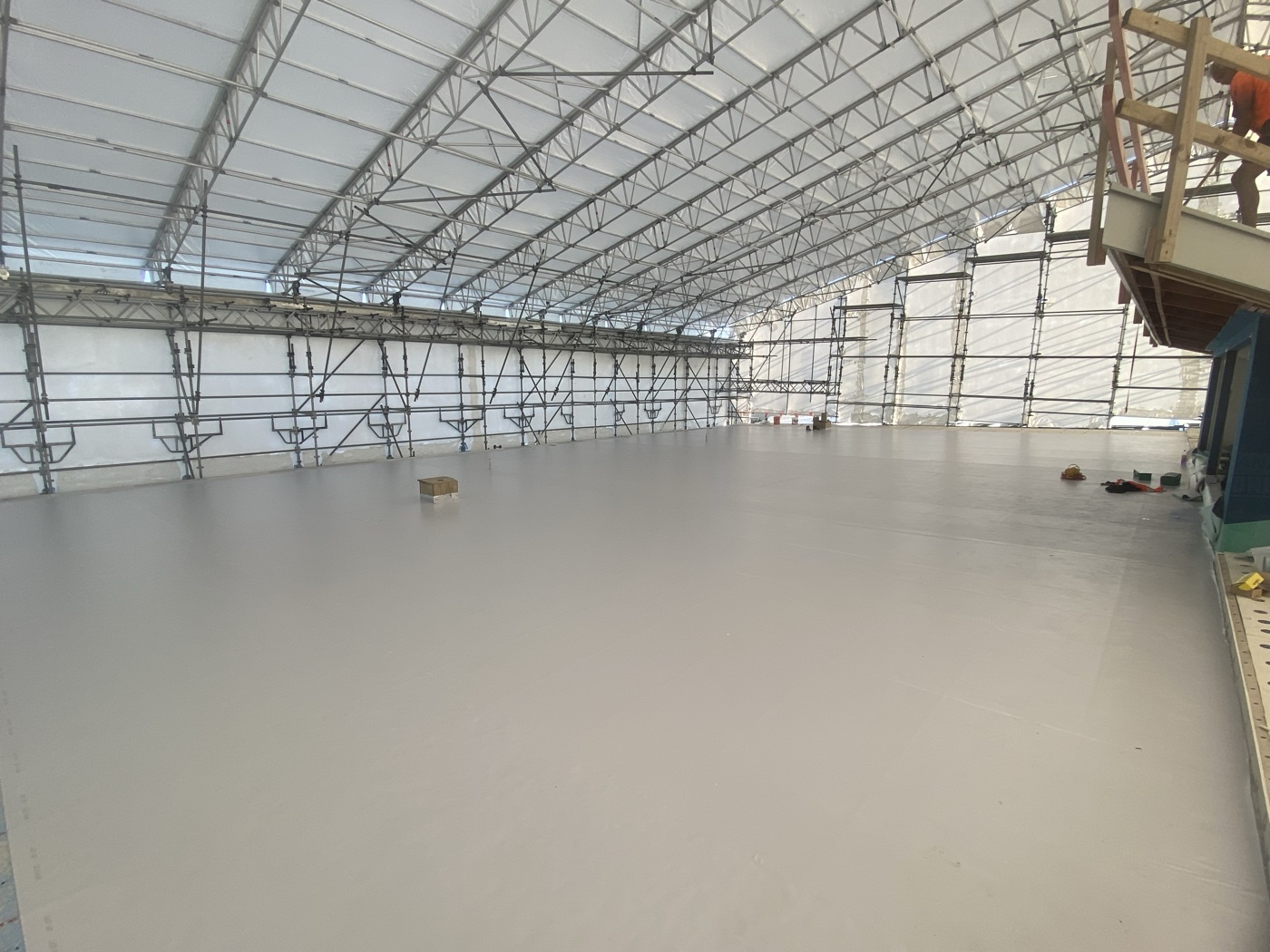
- Large industrial and warehouse facilities where long-term performance matters more than upfront cost
- Buildings with high foot traffic or mechanical equipment on the roof
- Projects with stringent warranty requirements — Fibertite warranties extend to 30 years
- Roof areas exposed to chemicals, oils, or industrial contaminants
- Re-roofing projects on critical infrastructure where a second failure is not acceptable
When a client asks for a 25-year warranty on a roof that has to perform without question, Fibertite is usually the answer. It's not the cheapest option — but it's the right one for projects where failure has real consequences.
Installation: the same process, higher standards
Fibertite is installed using the same hot-air welding process as standard TPO — overlapping sheets are welded at the seams to create a continuous waterproof layer. The key differences in the installation process:
- Weld parameters are tighter — temperature and speed settings are more critical with KEE polymer
- Seam testing is more rigorous — probe testing of every seam, plus periodic destructive testing on large projects
- Substrate preparation requirements are more demanding — Fibertite's rigidity means any substrate irregularities are more likely to telegraph through
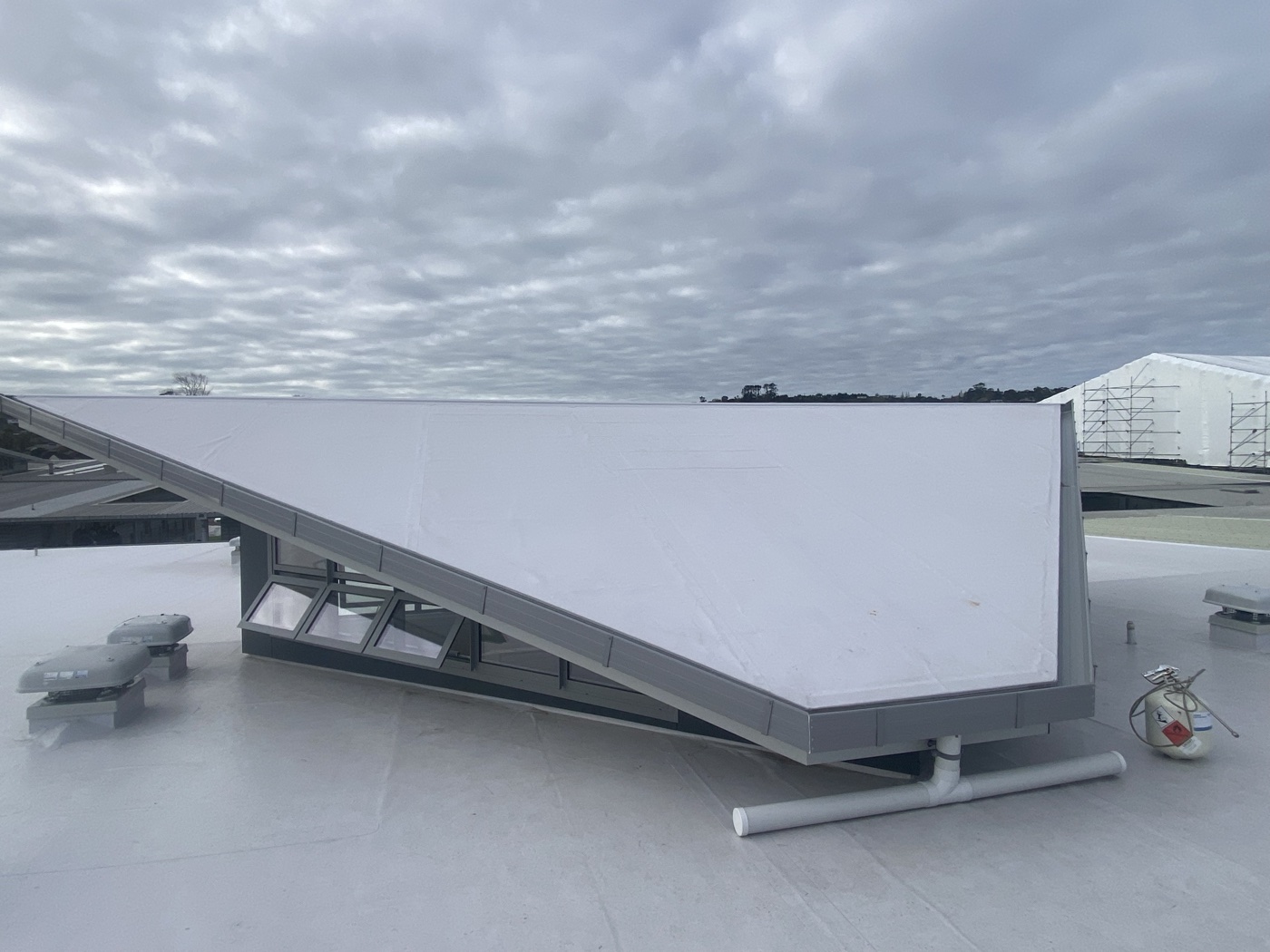
AquaProof's team has direct experience with Fibertite across large commercial installations in Auckland. Getting the weld parameters and substrate prep right is non-negotiable.
Cost and specification
Fibertite carries a cost premium of roughly 15–30% over equivalent standard TPO installations, depending on specification and project complexity. For most residential or standard commercial work, that premium isn't justified. For industrial facilities, long-span commercial roofs, or projects with 25+ year warranty requirements, it usually is.
If you're not sure whether Fibertite is the right specification for your project, the question to ask is: what is the cost of a roof failure in five or ten years? If that cost is high — lost production, water damage to stock, reputational risk, re-mobilisation on a busy site — the premium is worth taking seriously.
Fibertite is available in multiple thicknesses (32, 40, 45, 60 mil). The right specification depends on the application, traffic loading, and warranty requirement. We'll help you select the correct grade for your project.
Fibertite for your commercial project?
We'll assess the site and give you a clear recommendation — with honest reasons for or against Fibertite on your specific job.
Get a Free Quote